Building Smarter: Strategies for Reducing C&D Waste

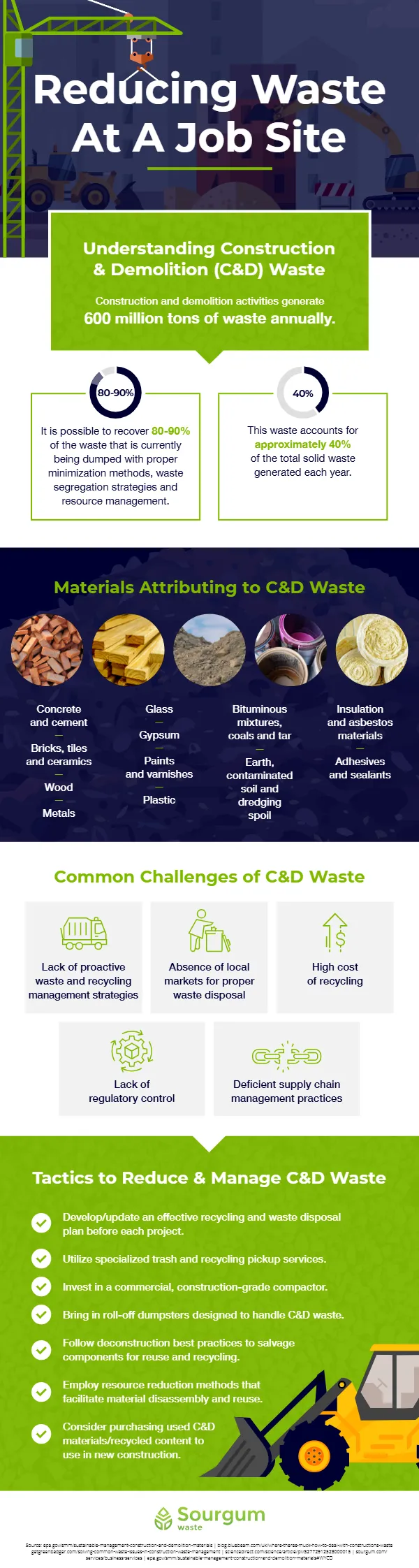
The construction and demolition (C&D) industry plays a crucial role in supporting an ever-growing global population. With homes, offices, and infrastructure constantly in demand, the pace of development shows no signs of slowing down. However, with this expansion comes a staggering amount of waste — globally, C&D activities account for an estimated 40% of total solid waste each year. In the United States alone, this figure reaches nearly 100 million tons annually.
While some waste is inevitable, the industry can take significant steps to minimize its impact. Here are a few strategies that can help C&D companies, large or small, reduce waste and protect the environment.
Understanding the causes of C&D waste is the first step. One major contributor is the lack of waste-reduction measures during the design phase. A study by environmental engineers found that design oversights can account for up to 33% of all construction waste. Other factors include design errors, unexpected changes during construction, improper handling and storage of materials, and a lack of knowledge about local recycling and disposal options.
Given these challenges, it’s clear that waste can accumulate rapidly. Fortunately, solutions are within reach. One effective approach is to establish a comprehensive waste management plan at the start of every project. This plan should consider the types of materials used, the scale of the project, and the waste disposal facilities available nearby.
The plan should incorporate practical methods to minimize waste generation, such as partnering with specialized waste removal and recycling services offered by Sourgum Waste, using roll-off dumpsters for C&D materials, and compacting waste to reduce its volume.
Another impactful strategy is to choose deconstruction over traditional demolition. Deconstruction involves carefully dismantling a building to salvage materials for reuse. This practice not only conserves resources but also reduces the release of hazardous substances like toxic dust and heavy metals.
Implementing these and other strategies can significantly reduce the environmental footprint of C&D activities. By adopting waste-conscious practices, the industry can meet the demands of growth while safeguarding the planet.